
The HRMS Software That Grows With You: A Smarter Way to Manage Employees in 2026
Akhilesh Girhe
Author
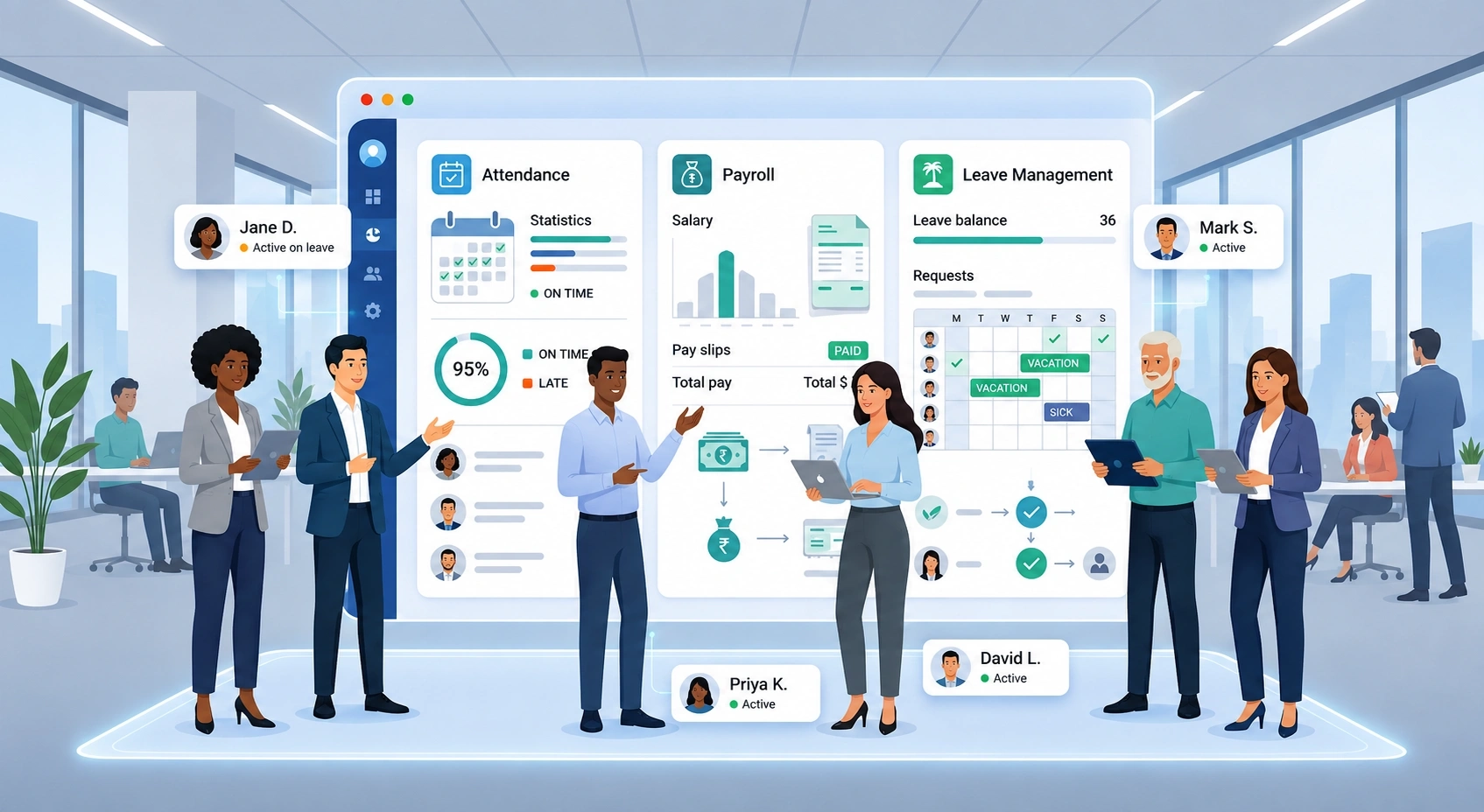
Managing people is hard enough without fighting spreadsheets, scattered attendance sheets, and payroll errors every month. That's exactly why more companies — from growing startups to established enterprises — are investing in HRMS software to run their HR operations smoothly.
If you're evaluating HR system software for your business, this guide breaks down what an HRMS actually does, what to look for in the best HR software, and why partnering with the right software development company can make all the difference between a generic tool and a system that actually fits how your team works.
What Is HRMS Software?
HRMS (Human Resource Management System) is a digital platform that centralizes every core HR function — attendance, payroll, leave management, performance reviews, recruitment, and employee records — into a single, unified system.
Instead of juggling Excel sheets, WhatsApp approvals, and manual payroll calculations, an employee management system automates these processes, reduces human error, and gives HR teams (and employees) real-time visibility into everything from leave balances to salary slips.
For businesses in Maharashtra and beyond, this shift isn't just about convenience — it's about scaling without adding administrative overhead every time the headcount grows.
Why Every Growing Business Needs an HRMS
1. Manual HR Processes Don't Scale
A 10-person team can survive on spreadsheets. A 100-person team can't. As companies grow, manual attendance tracking, paper-based leave approvals, and error-prone payroll calculations start costing real time and money.
2. Compliance Gets Complicated Fast
Indian labor law compliance — PF, ESI, gratuity, tax deductions — gets messy without a system tracking it automatically. A solid HR system software keeps you compliant without needing a dedicated compliance team.
3. Employees Expect Self-Service
Modern employees expect to check their leave balance, download pay slips, and update their details without emailing HR every time. An employee management system with self-service portals reduces HR's ticket load significantly.
4. Data-Driven HR Decisions
The best HRMS platforms don't just store data — they turn it into insights. Attrition trends, attendance patterns, and performance metrics help leadership make better people decisions.
What to Look for in the Best HR Software
Not all HRMS platforms are built the same. Here's what actually matters when evaluating options:
Customization – Can it adapt to your company's specific workflows, or are you forced into someone else's process?
Scalability – Will it still work when you go from 50 employees to 500?
Integration – Does it connect with your payroll, accounting, and existing tools?
Data security – Is employee data hosted securely, with proper access controls?
Ease of use – Will your HR team and employees actually adopt it, or will it sit unused?
Local compliance support – Does it handle Indian payroll and statutory compliance out of the box?
Off-the-shelf platforms like Keka, greytHR, and Zoho People check some of these boxes — but they're built for the average business, not your business. If your workflows, approval hierarchies, or reporting needs are even slightly non-standard, you end up working around the software instead of the other way around.
Why a Custom-Built HRMS Often Wins
This is where working with a dedicated software development company changes the equation. Instead of paying recurring per-employee licensing fees for a generic tool, a custom HRMS is built around how your business actually operates.
The advantages of custom software development for HRMS:
No feature bloat — you get exactly what your team needs, nothing you're paying for and never using
Full ownership — no vendor lock-in, no sudden pricing changes, no forced upgrades
Tailored workflows — approval chains, leave policies, and reporting structures match your actual org structure
One-time or flexible investment — often more cost-effective long-term than per-seat SaaS pricing as your team grows
Data control — your employee data stays on infrastructure you control
For businesses in Pune, Nagpur, and across Maharashtra, this local-first, custom-fit approach is increasingly replacing generic SaaS subscriptions — especially for companies that have outgrown what standard tools offer.
Who Should Consider a Custom HRMS?
Companies with 20–500+ employees experiencing HR process bottlenecks
Businesses with non-standard approval structures (multiple departments, regional offices, custom leave policies)
Organizations paying high recurring costs for per-employee HRMS licenses
Companies wanting full data ownership instead of third-party cloud dependency
Businesses that have tried generic tools and hit customization walls
Final Thoughts
The right HRMS software doesn't just digitize HR — it removes friction from how your entire company runs. Whether you go with an established platform or a custom-built employee management system, the goal is the same: less manual work, fewer errors, and better visibility into your workforce.
If off-the-shelf tools like Keka, greytHR, or Zoho People haven't quite fit your workflows, it may be time to explore a custom-built alternative — one designed around how your business actually works, not the other way around.
Looking for an HRMS built specifically for your business? MyTecSys designs and develops custom HR management systems tailored to your workflows, compliance needs, and growth plans. Talk to our team to see how a custom HRMS can simplify your HR operations.
Keywords targeted: software development company, software development, HRMS software, best HR software, employee management system, HR system software, HRMS
Frequently Asked Questions
Explore Other Blogs
Custom Documents Module in Odoo: Centralize Business Documents with Organized Folder Management
Oct 10, 2026
Auto Recurring Billing in Odoo: Simplify Property Billing, Due Dates, and Fine Management
Oct 10, 2026
Electricity Subscription Billing in Odoo: Automate Recurring Electricity Billing and Usage Management
Oct 10, 2026
Electric Bill Management Dashboard: Simplify Electricity Billing and Meter Reading Management
Oct 10, 2026
WhatsApp Chatwoot Integration in Odoo: Centralize Customer Conversations
Oct 10, 2026